
Exit strategy planning is a critical aspect that every business owner should consider, regardless of the stage of their company. It acts as a roadmap for navigating the complexities of transitioning ownership, ensuring that the process is as smooth and beneficial as possible. By understanding the various types of exit strategies, from sales to mergers, businesses can strategically position themselves for maximum advantage and future growth.
This planning not only prepares owners for inevitable changes but also enhances overall business innovation, aligns with market dynamics, and addresses the unique challenges of both small and large enterprises. A well-crafted exit strategy can make all the difference in achieving desired outcomes and securing a legacy.
Exit Strategy Fundamentals
Implementing an exit strategy is a crucial aspect of business planning that Artikels how owners intend to leave their current position, whether through selling, merging, or closing the business. A well-conceived exit strategy not only helps in maximizing the value of the business but also provides a smooth transition for all stakeholders involved.Various types of exit strategies can be utilized depending on the business’s goals and market conditions.
Some common strategies include selling to a third party, passing the business to family members, merging with another company, or even an initial public offering (IPO). Each of these strategies has its unique applications and implications, making it essential for business owners to choose one that aligns with their long-term objectives.Having a well-structured exit strategy is paramount for ensuring that business owners can capitalize on their investment.
It provides clarity and direction, enabling them to prepare for future opportunities while minimizing risks associated with unforeseen circumstances.
Business Innovation and Exit Strategies
Innovative approaches play a pivotal role in enhancing exit strategy planning. By adopting new technologies and creative business models, companies can significantly boost their market value before exiting. For instance, a startup that integrates artificial intelligence into its operations may attract higher offers from potential buyers due to its competitive advantage.Numerous businesses have successfully utilized innovation in their exit strategies.
For example, a tech company that developed a groundbreaking app can leverage its unique value proposition to negotiate better terms during acquisition discussions. Furthermore, technology has revolutionized the exit landscape by enabling seamless communication and data sharing, which are vital for attracting prospective buyers and investors.
International Business Exit Strategies
International businesses face unique challenges when planning their exit strategies, including regulatory hurdles and market dynamics. These challenges necessitate a tailored approach that considers the specific legal and cultural landscapes of different countries. Best practices for developing effective exit strategies in various markets include conducting thorough market research, understanding local regulations, and building relationships with local stakeholders. For instance, exit strategies that work well in Europe may differ significantly from those in Asia due to variations in consumer behavior and legal frameworks.
Comparing exit strategies across countries reveals varying levels of effectiveness. In some regions, mergers and acquisitions prove to be the most successful, while in others, a straightforward sale might yield better outcomes.
Business Management Considerations
The management aspects that influence exit strategy planning are crucial for determining the success of the exit process. Leadership plays a significant role in shaping the vision and direction of the exit strategy, which can directly impact the decision-making process. Different leadership styles can affect how exit strategies are perceived and executed. For example, a collaborative leader may foster open discussions among team members, leading to a more comprehensive and inclusive exit plan.
Conversely, an authoritarian approach may stifle creativity and limit input from key contributors.Aligning exit strategies with the overall business goals is essential for ensuring coherence and maximizing value. This alignment requires regular assessments and adjustments to the strategy as business objectives evolve.
Marketing and Exit Strategies
Marketing strategies significantly influence both the timing and method of an exit. A well-executed marketing plan can enhance a business’s visibility and attractiveness to potential buyers, ultimately affecting the exit’s success. Branding during the exit phase is of paramount importance. A strong brand can command a premium price, making it essential for business owners to maintain their branding efforts even as they prepare for an exit.
To effectively market a business that is preparing to exit, owners should consider strategies like highlighting unique selling points, showcasing growth potential, and ensuring that financial records are transparent and well-organized.
Networking for Successful Exits
Networking plays a critical role in planning a successful exit. Building and maintaining relationships with key industry contacts can provide valuable insights and support throughout the exit process. Identifying key contacts such as brokers, financial advisors, and potential buyers is essential for facilitating a smooth transition. These relationships can help business owners navigate the complexities of the exit process more effectively.Leveraging relationships to enhance exit outcomes involves cultivating trust and open communication with stakeholders.
By doing so, business owners can create a supportive environment that fosters collaboration and increases the chances of a successful exit.
Risk Management in Exit Strategies
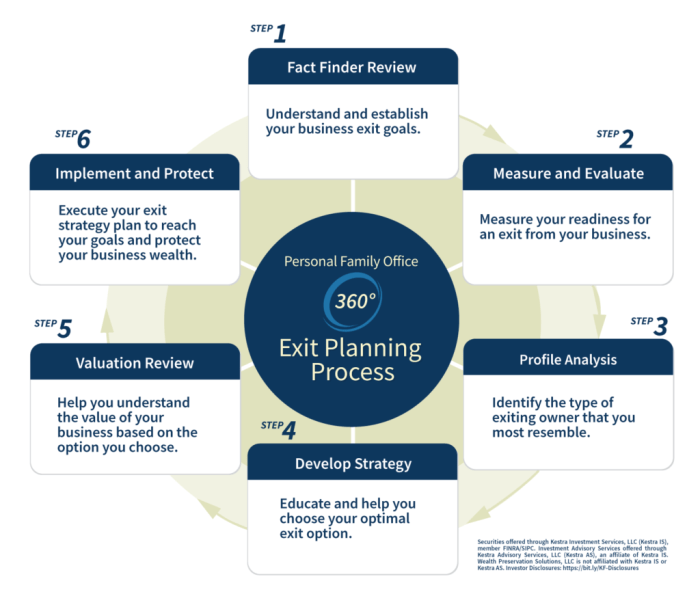
Every exit strategy comes with inherent risks that must be carefully managed. Understanding these risks is crucial for developing a robust exit plan that minimizes potential pitfalls.Frameworks for assessing and mitigating risks during the exit planning process should include elements such as financial analysis, market assessment, and stakeholder impact evaluation. Businesses that proactively address these risks are more likely to achieve successful exits.Case studies of businesses that faced challenges in their exit strategies often reveal the importance of thorough planning.
For instance, companies that neglected to perform due diligence prior to a sale may encounter unforeseen complications that could jeopardize the exit.
Business Sales Techniques
Effective sales techniques tailored to exit strategies can significantly influence the outcome of the exit process. These techniques focus on presenting the business in the best light to attract potential buyers.When presenting a business to potential buyers, it’s essential to highlight key metrics such as revenue growth, market position, and customer loyalty. These factors can greatly enhance a buyer’s perception of value.Timing in the sales process is also critical.
Properly timing the exit can maximize the sale price and ensure that the business is positioned favorably within the market.
Training for Exit Strategy Implementation
Designing training programs that prepare teams for executing exit strategies is vital for ensuring a smooth transition. Training should focus on developing the skills and competencies required for successful implementation.Key skills include negotiation tactics, financial analysis, and strategic planning. These competencies empower teams to navigate the complexities of exit strategies effectively.Methods for evaluating training effectiveness in the context of exit strategies should include performance assessments and feedback from team members involved in the implementation process.
Strategic Planning for Exits
Strategic planning plays a fundamental role in developing comprehensive exit strategies. A structured approach allows business owners to Artikel their objectives, evaluate options, and create a roadmap for the exit process.A step-by-step guide for creating a comprehensive exit strategy should include setting clear goals, conducting market research, assessing financial implications, and developing communication plans for stakeholders.Integrating exit strategies into the overall business plan ensures that they are considered throughout the business lifecycle, allowing for adjustments as needed to align with evolving business goals.
Team Building and Exit Strategies
The impact of team dynamics on exit strategy planning cannot be overstated. A cohesive team can foster collaboration, leading to innovative solutions and a successful exit process.Methods for fostering collaboration among team members during the exit process include regular meetings, open communication, and shared responsibility for achieving common goals.Case studies demonstrating successful team efforts in executing exit strategies highlight the value of strong teamwork in achieving desired outcomes.
Workplace Communication During Exits
Effective communication strategies are necessary during the exit process to ensure that all stakeholders are informed and engaged. Clear messaging can help alleviate concerns and build trust among employees and investors.Examples of effective messaging to stakeholders during an exit include transparent updates about the process, addressing potential impacts on the workforce, and outlining the future vision for the business.Transparency in communication is essential when planning an exit, as it builds credibility and fosters a positive environment for all parties involved.
Exit Strategies for Small Businesses
Small businesses often face unique challenges in exit strategy planning, such as limited resources and market visibility. These challenges require tailored approaches that consider their specific contexts.Success stories of small businesses that effectively executed exit strategies can serve as valuable lessons for others. For instance, a family-owned business that successfully transitioned to new ownership through a well-planned exit can inspire similar efforts.Resources available to small businesses for planning exits include mentorship programs, business advisory services, and local networking opportunities that can guide owners through the exit process.
Solo Professionals and Exit Strategies
Solo professionals have particular considerations when it comes to exit strategy planning, as their businesses are often closely tied to their personal brand. This uniqueness requires careful planning and execution.Guidelines for transitioning solo practices to new ownership include developing a succession plan, identifying potential buyers, and preparing comprehensive documentation to facilitate the transition.Insights into financial planning for solo professionals during exit highlight the importance of ensuring financial stability and securing future income streams post-exit.
Venture Capital and Exit Strategies
Venture capital plays a significant role in shaping exit strategies for startups. Investors often have specific expectations regarding the timeline and nature of exits, which can influence strategic decisions.Understanding the expectations of investors regarding exits is crucial for entrepreneurs seeking funding. Investors typically look for clear exit paths that can deliver returns on their investments.Successful exit strategies employed by venture-backed companies often involve clear milestones and defined timelines, ensuring that both entrepreneurs and investors are aligned throughout the exit process.
Summary
In conclusion, effective exit strategy planning is not merely about leaving a business; it’s about ensuring that such a transition is well thought out and executed with precision. With the right strategies in place, business owners can maximize their investments and pave the way for future opportunities, whether for themselves or the next generation of leaders. Ultimately, proactive planning and execution can lead to rewarding exits that honor the hard work and dedication put into the business.
General Inquiries
What is an exit strategy?
An exit strategy is a plan for how a business owner intends to leave their business, ensuring a smooth transition and maximizing value.
Why is exit strategy planning important?
It is important because it helps business owners prepare for the future, optimize their business value, and mitigate potential risks during the transition.
What are some common exit strategies?
Common exit strategies include selling the business, merging with another company, transferring ownership to family members, or closing down.
How can technology aid in exit strategy planning?
Technology can streamline the planning process, provide data analysis for better decision-making, and facilitate communication with potential buyers or partners.
What can small businesses do to prepare for an exit?
Small businesses can start by keeping accurate financial records, building a strong customer base, and consulting with professionals to formulate a solid exit plan.


